Summarize this post with AI
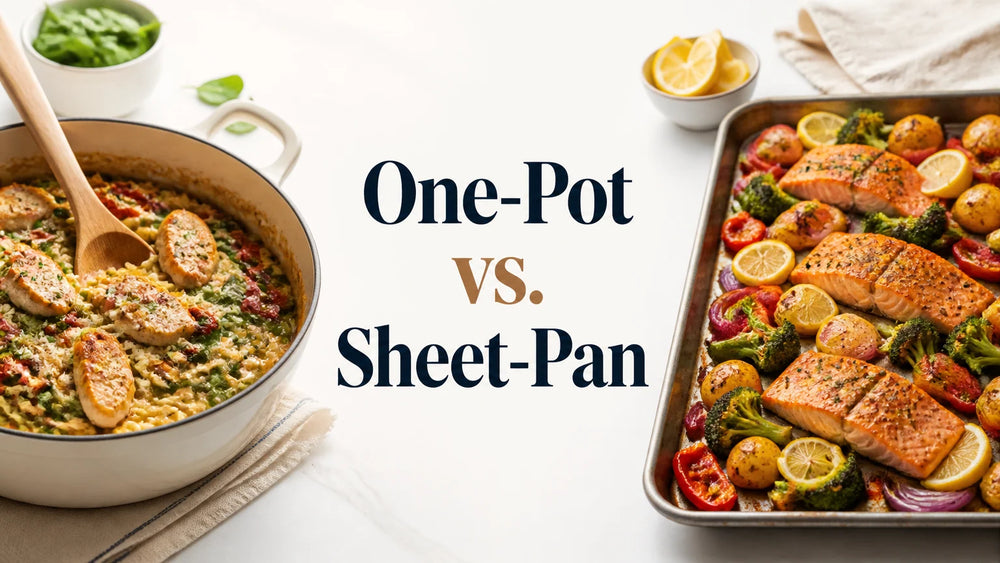
Easy weeknight dinners is a comparison of one-pot and sheet-pan meals for speed and simplicity. This guide gives a clear verdict, practical trade-offs, and choosing tips so you can pick the fastest format for your weeknight goals.
Table of Contents
- Quick answer — which is better for fast weeknight meals and who should pick which
- Key differences that affect how quickly you can get dinner on the table
- Choosing the right format for your weekly plan
- Common speed-related pitfalls and how to avoid them
- FAQ — quick answers to follow-up questions
- Are one-pot dinners always faster than sheet-pan meals for weeknights?
- Can I make high-protein one-pot or sheet-pan dinners without extra steps?
- What are the best pantry staples to keep for fast one-pot and sheet-pan dinners?
- How do I store and reheat one-pot or sheet-pan leftovers safely?
Quick answer — which is better for fast weeknight meals and who should pick which
One-pot meals are best when you want minimal cleanup and steady stovetop or slow-simmer convenience — ideal for busy solo cooks, beginners, and anyone who prefers fewer dishes. They often combine starch, protein, and vegetables in one vessel so you can cook with fewer steps and less active time.
Sheet-pan meals win when you need quick hands-off roasting and want crisp textures, or when feeding families and meal-prep batches. They let you cook many items at once under the oven’s even heat, making them a solid pick for meal planners and cooks who like roasted vegetables and higher-protein portions with minimal stovetop time.
Key differences that affect how quickly you can get dinner on the table
Prep time: One-pot dinners often require chopping and layering ingredients that go in at different times, but many pantry-friendly one-pot recipes use prepped canned or frozen items to cut prep. Sheet-pan meals usually need more uniform chopping for even roasting, which can be faster if you use pre-cut vegetables or a food processor.
Active cooking vs hands-off time: One-pot dishes can demand periods of stirring or deglazing, though many are largely hands-off once simmering. Sheet-pan dinners benefit from the oven’s passive heat — you arrange ingredients, roast, then finish — giving you time to pack lunches or set the table. Consider whether you prefer short bursts of attention or extended hands-off cooking.
Cleanup and cookware: One-pot meals give you a clear cleanup win when a single pot does it all, making them preferable for small kitchens or cooks who dislike dishwashing. Sheet-pan dinners can require only one pan when lined or using a rimmed sheet, but if you finish proteins separately (searing first) cleanup adds up. Oven vs stovetop availability and multitasking potential also factor: ovens free the stove for rice, sauces, or quick sides.
Practical implications: If you need dinner while helping kids with homework or balancing work calls, sheet-pan’s hands-off window is golden. If you want tidy stations and a fast sink-empty at the end, one-pot is your friend. Both formats scale well, but sheet-pans often serve larger groups with fewer batches.
Below is a quick comparison of how core attributes align with each format:
| Attribute | One-Pot | Sheet-Pan | Best For |
|---|---|---|---|
| Cleanup | Minimal | Low–moderate | Solo cooks, small kitchens |
| Hands-off time | Moderate | High | Meal planners, busy parents |
| Texture variety | Soft, stewy | Crisp-roasted | Roasted veg fans |
| Equipment | Pot, Dutch oven | Rimmed sheet, racks | Those with ovens |
Choosing the right format for your weekly plan
Match format to pantry staples and equipment. If your pantry is stocked with canned tomatoes, beans, dried pasta, and grains, one-pot meals can be assembled quickly without specialty tools. If you keep frozen vegetables, pre-cut potatoes, and oven-ready proteins, sheet-pan meals let you mix-and-roast for fast results. Think about oven space when planning multiple dishes — an oven with a single rack suits sheet-pan batches but can limit simultaneous cooking.
Family size and dietary needs matter: For vegetarian weeknights, one-pot lentil stews or chickpea skillet dishes deliver protein and leftovers easily. High-protein seekers can use sheet-pan salmon or chicken thighs roasted alongside beans and broccoli for high-protein plates with crisp edges. If you build weekly menus, alternate formats: one night a one-pot stew for quick cleanup, another night a sheet-pan roast for hands-off prep and texture variety.
Use the store’s recipe collections to simplify planning; browse our one-pot and sheet-pan recipe collections to filter by prep time, serving size, and pantry-friendly ingredients. When planning, list staples for each format and batch-cook components (grains, roasted veg) to speed dinners across the week.
Common speed-related pitfalls and how to avoid them
Mistake: following overcomplicated recipes with many steps. Fix: choose recipes with clear ingredient lists and step-by-step instructions; swap long techniques for simple substitutes like canned beans or pre-cooked grains. Mistake: skipping mise-en-place. Fix: chop and portion ingredients before heating the pan — a 10–15 minute prep window saves time during active cooking.
Wrong cookware and overcrowding pans are frequent slowdowns. Overcrowding sheet-pans makes food steam instead of roast, increasing cook time and reducing crispness. Use two pans or space items out, or swap smaller items for faster-roasting cuts (thin carrots instead of whole). For one-pot dishes, using a heavy-bottomed Dutch oven gives even heat and reduces the need for constant stirring.
Ignoring oven preheat wastes minutes. Start preheating while you prep to overlap tasks. Keep pantry-friendly, time-saving substitutions on hand: canned tomatoes for slow-simmered sauces, quick-cooking couscous instead of rice for faster grain cook times, and frozen chopped greens to add at the end. Simple planning and these substitutions preserve flavor while shaving time.
- Time-savers to keep handy: canned legumes, jarred sauces, pre-cooked grains, frozen veg, and parchment for easy cleanup
- Prep habits: batch-chop vegetables on weekends, and portion proteins into meal-ready packs
- Cookware tips: use a heavy pot for one-pot simmering and a rimmed baking sheet with a silicone liner for sheet-pan roasting
FAQ — quick answers to follow-up questions
Are one-pot dinners always faster than sheet-pan meals for weeknights?
Not always. One-pot dinners minimize cleanup and can reduce active hands-on time, but sheet-pan meals often offer longer hands-off roasting windows and faster overall cook times when you roast small, evenly cut ingredients. Choose based on whether you value minimal dishes or passive oven time and crisp textures.
Can I make high-protein one-pot or sheet-pan dinners without extra steps?
Yes. Use protein-forward ingredients that cook on the same schedule as your vegetables — canned beans, lentils, tofu, or quick-cut chicken/tofu strips for one-pot recipes, and bone-in chicken thighs or salmon fillets for sheet-pan meals. Season simply and roast or simmer with pantry staples to keep steps minimal.
What are the best pantry staples to keep for fast one-pot and sheet-pan dinners?
Keep canned tomatoes, canned beans, dried pasta, quick-cooking grains (couscous, bulgur), olive oil, dried herbs, soy sauce, and frozen vegetables. These staples let you swap ingredients quickly, shorten prep, and maintain flavor without complex shopping lists.
How do I store and reheat one-pot or sheet-pan leftovers safely?
Cool leftovers quickly and refrigerate within two hours in shallow containers. Most cooked dishes keep 3–4 days in the fridge. Reheat in a covered skillet or oven until steaming hot, or microwave in short bursts stirring between intervals. For sheet-pan meals, a 350°F oven for 10–15 minutes restores crispness better than microwaving.
Key takeaway: pick the format that fits your time, kitchen setup, and texture preferences — one-pot for minimal cleanup and ease, sheet-pan for hands-off oven cooking and crisp results. Try alternating both across the week and use pantry-friendly staples to shave minutes off prep; if you want recipe ideas, explore our one-pot and sheet-pan recipe collections and tell us what worked for your weeknight routine.